
cool architecture in Marfa, TX
this town is about art and architecture, right?
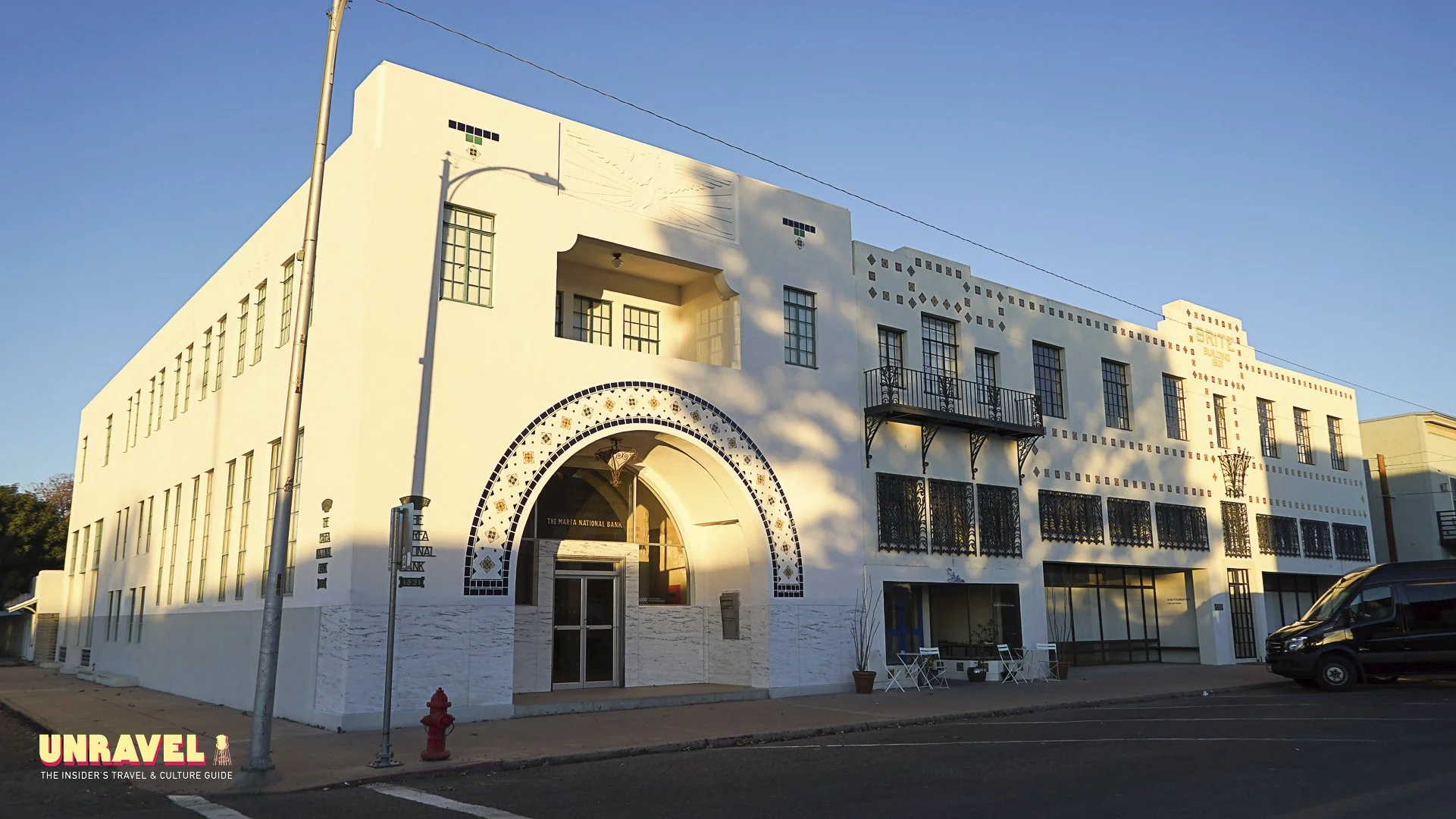
Marfa’s architecture feels less like a backdrop and more like a conversation between land, history, and ideas. At its heart is a remarkable marriage of old and new: century‑old adobe and brick façades sit alongside pristine minimalist structures that have reshaped how the world thinks about space and place. What you see walking Marfa’s quiet streets isn’t a single style, but a dialogue—between humble beginnings as a railroad stop and its evolution into a site of global cultural curiosity.
Much of Marfa’s architectural identity stems from the influence of artist Donald Judd, who chose this West Texas town in the 1970s as the site for his life’s work. His vision wasn't just to place art in a building, but to fuse art, architecture, and landscape into a unified experience. The expansive buildings of The Chinati Foundation—repurposed from a former army base and now covering hundreds of acres—stand as testament to that vision. Their pared‑down forms, concrete expanses, and industrial scale contrast the vast desert horizon, yet feel inseparable from it.
Even Judd’s interventions within the town—like repurposing historic commercial buildings on Highland Avenue and preserving them as part of the Central Marfa Historic District—reflect a design ethos rooted in respect for both place and purpose. These structures, now on the National Register of Historic Places, reveal a town that values its layered past as much as its creative rebirth.
But Marfa’s architecture doesn’t live in a vacuum. It’s both reflective and provocative: rustic adobe homes share the street with sleek galleries and studios where light, shadow, and volume become intentional elements of design. This blend of simplicity and sophistication creates a visual rhythm that feels uniquely Marfa—an unplanned but deeply expressive urban fabric that rewards slow observation and wide‑eyed curiosity.
UNRAVEL Tip
Don’t just walk through Marfa. look up, down, and across. Notice the textures of adobe, the geometry of modernist galleries, and the way sunlight shifts across each façade. Take a few moments to step off the street, linger in a plaza, or peek into a courtyard—Marfa’s architecture isn’t just seen; it’s experienced.
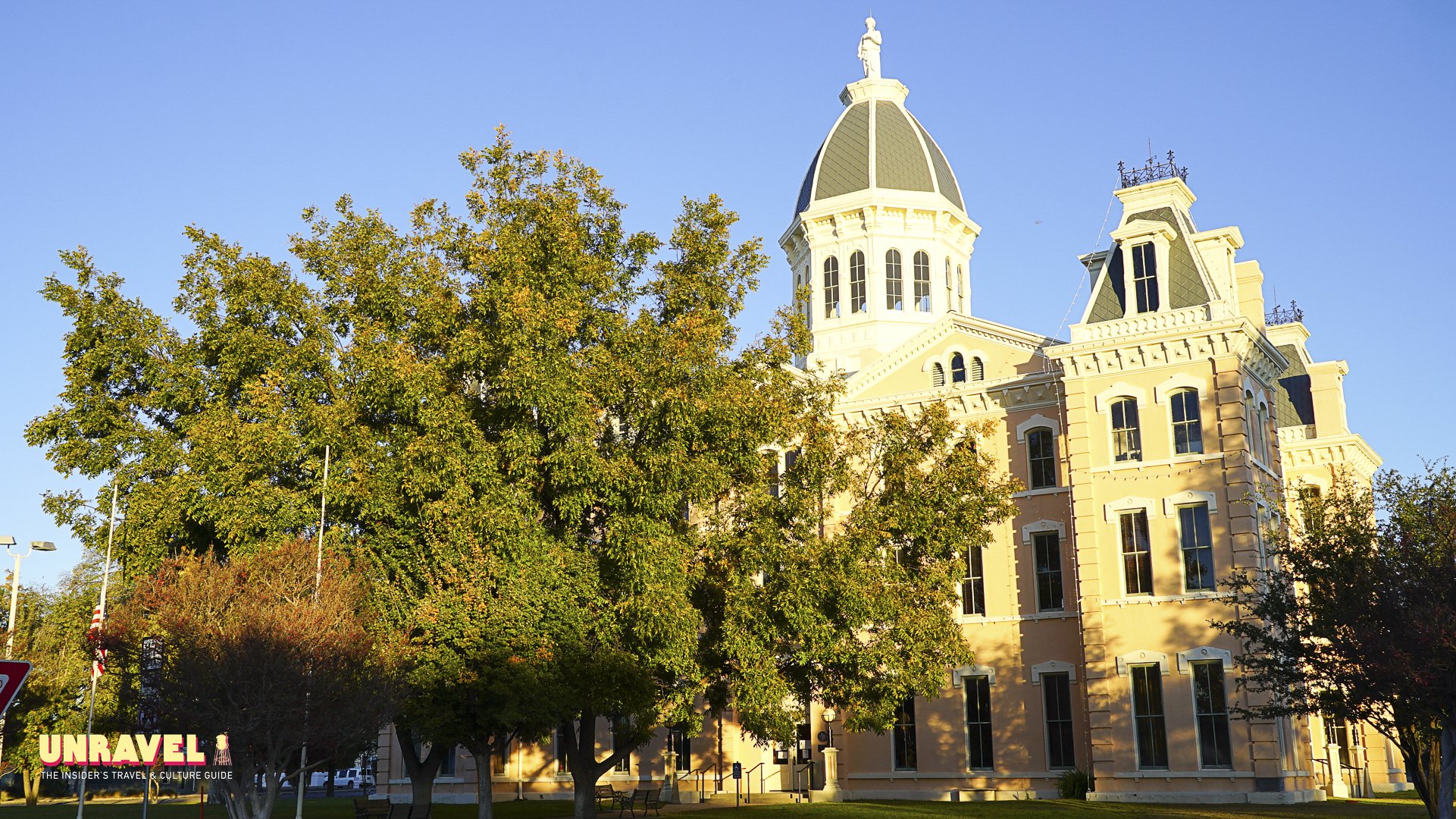
#5: presidio county courthouse
The Presidio County Courthouse isn’t just a building—it’s Marfa’s civic heartbeat and a masterclass in 19th-century ambition. Designed by San Antonio architect Alfred Giles and completed in 1886, this pink‑stuccoed Second Empire gem commands the town square with its ornate tower, Roman arches, and a Lady Justice that surveys the town without her scales, adding a dash of local legend to its stately presence.
Inside, pecan wood finishes, sweeping staircases, and a grand rotunda speak to craftsmanship from another era. Restoration keeps it fully functional as a courthouse, but the real reward is accessible to those willing to climb: the cupola. From up there, the Marfa vistas stretch endlessly, the Davis Mountains punctuate the horizon, and you can feel the town’s layered history unfold beneath your feet. For “Unravelers” willing to venture upward, it’s hands-down the best panoramic view in town.
The courthouse isn’t just architecture—it’s an invitation. Walk the square, linger in the details, and let it anchor your understanding of how history, design, and landscape converge in Marfa.
UNRAVEL Tip
The cupola is open to adventurous visitors. climb up for a 360° view of Marfa, from the sprawling plains to the distant Davis Mountains. It’s the ultimate vantage point for architecture lovers, photographers, and anyone who wants to see the town from the top down.
#4: robert irwin’s untitled (Dawn to dusk)
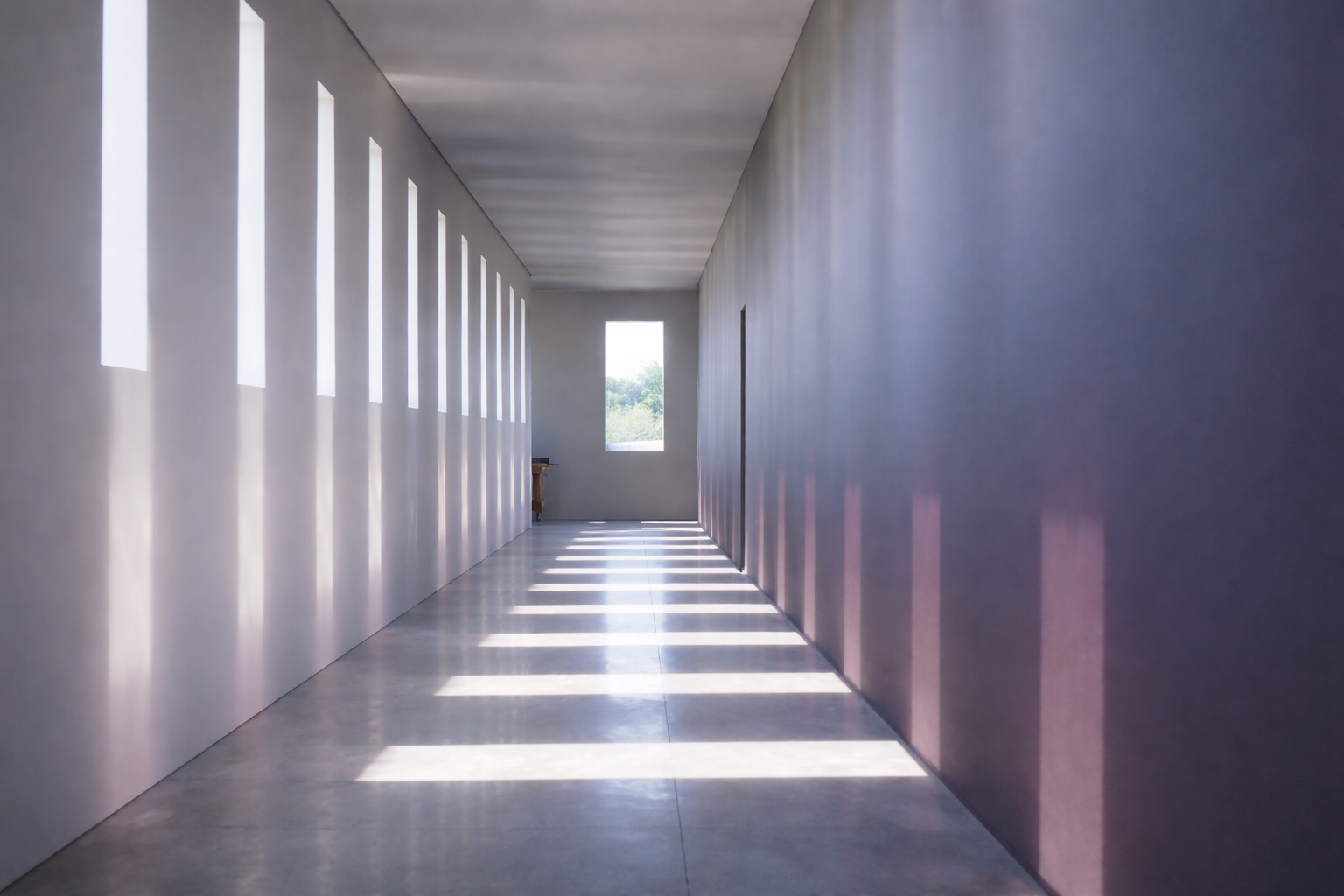
Among Marfa’s architectural surprises is a work that blurs art, building, and landscape in a way that feels utterly of this place: Robert Irwin’s untitled (dawn to dusk) at the Chinati Foundation. It’s not just another gallery space—it’s the only freestanding structure Irwin ever conceived as a total work of art, and it dominates without yelling.
Sited on the footprint of a long‑abandoned army hospital, this large, C‑shaped concrete form quietly weaves indoors and outdoors, light and shadow. One wing embraces brightness, the other leans into darkness. Scrim walls—delicate yet monumental—stretch from floor to ceiling, turning sunlight into an active participant and making the passage of time visible in real time.
There’s something quintessentially Marfa about it: a structure that resists easy interpretation, demands slowing down, and makes you aware of how the vast West Texas light redefines space and surface. It’s architecture that feels like a living instrument of perception—something you experience rather than just observe.
And because it’s part of Chinati’s permanent collection—where each artist’s work resides in its own architectural vessel—the Irwin building joins an extraordinary conversation with Donald Judd’s massive concrete works and aluminum installations. Together, they extend Marfa’s architectural identity beyond skyline and street into something more elemental: form as atmosphere, site as collaborator.
UNRAVEL Tip
See untitled (dawn to dusk) with a guide. its play of light and space changes by the hour, and the experience deepens when you allow the building itself to be your frame of reference.
we are a start-up! - our rates are cheap
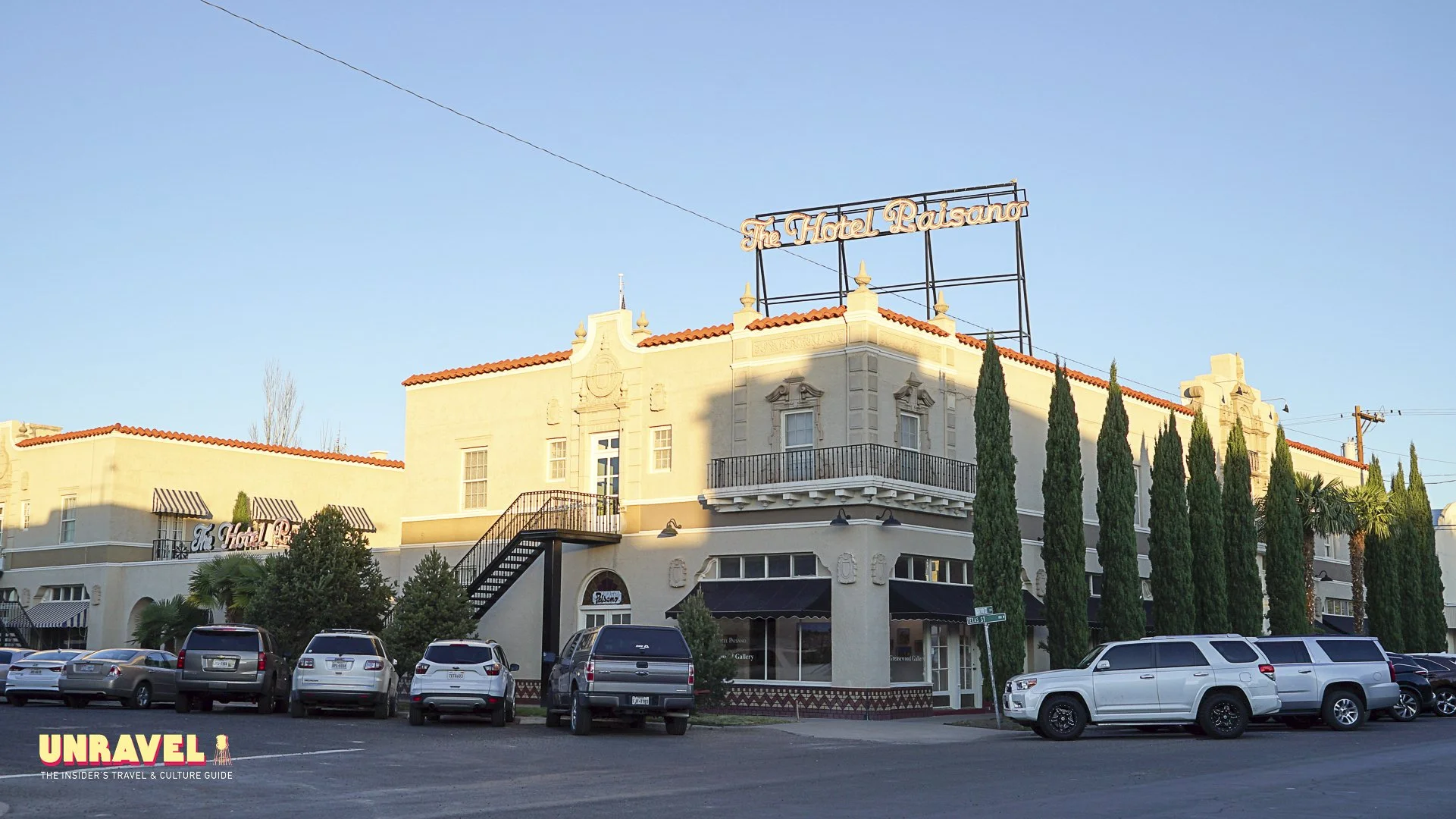
#3: Hotel paisano
The Hotel Paisano has been Marfa’s signature address since 1930, a Spanish Revival landmark that brought a touch of elegance to the high desert. Its arcaded balconies, terra-cotta roof tiles, and stuccoed walls stand in deliberate contrast to the rugged landscape, signaling ambition and style in a town built on practicality.
The Paisano isn’t just architecture—it’s a vessel of stories. In 1955, it became home to Elizabeth Taylor, Rock Hudson, and James Dean during the filming of Giant, cementing its place in both Hollywood and local lore. Imagine the buzz in the lobby as the stars arrived, the desert sun casting long shadows across the square, and Marfa itself becoming a co-star in one of cinema’s most iconic epics.
Today, the hotel still radiates that same combination of history and presence. Inside, the polished wood, patterned tile, and vintage details nod to its past, while the airy courtyards and shaded balconies invite reflection. Whether you linger over a drink in the lobby or watch the sunset from the balcony, the Paisano reminds visitors that Marfa’s architecture isn’t just about buildings—it’s about the personalities, energy, and moments they’ve held over nearly a century.
UNRAVEL Tip
Skip the lobby this time and head straight for the courtyard outside Jett’s. Grab a seat under the shade, sip a coffee or cocktail, and watch the desert light shift across the historic stucco walls—Marfa’s energy is at its most relaxed and unhurried here.
#2: historic central district
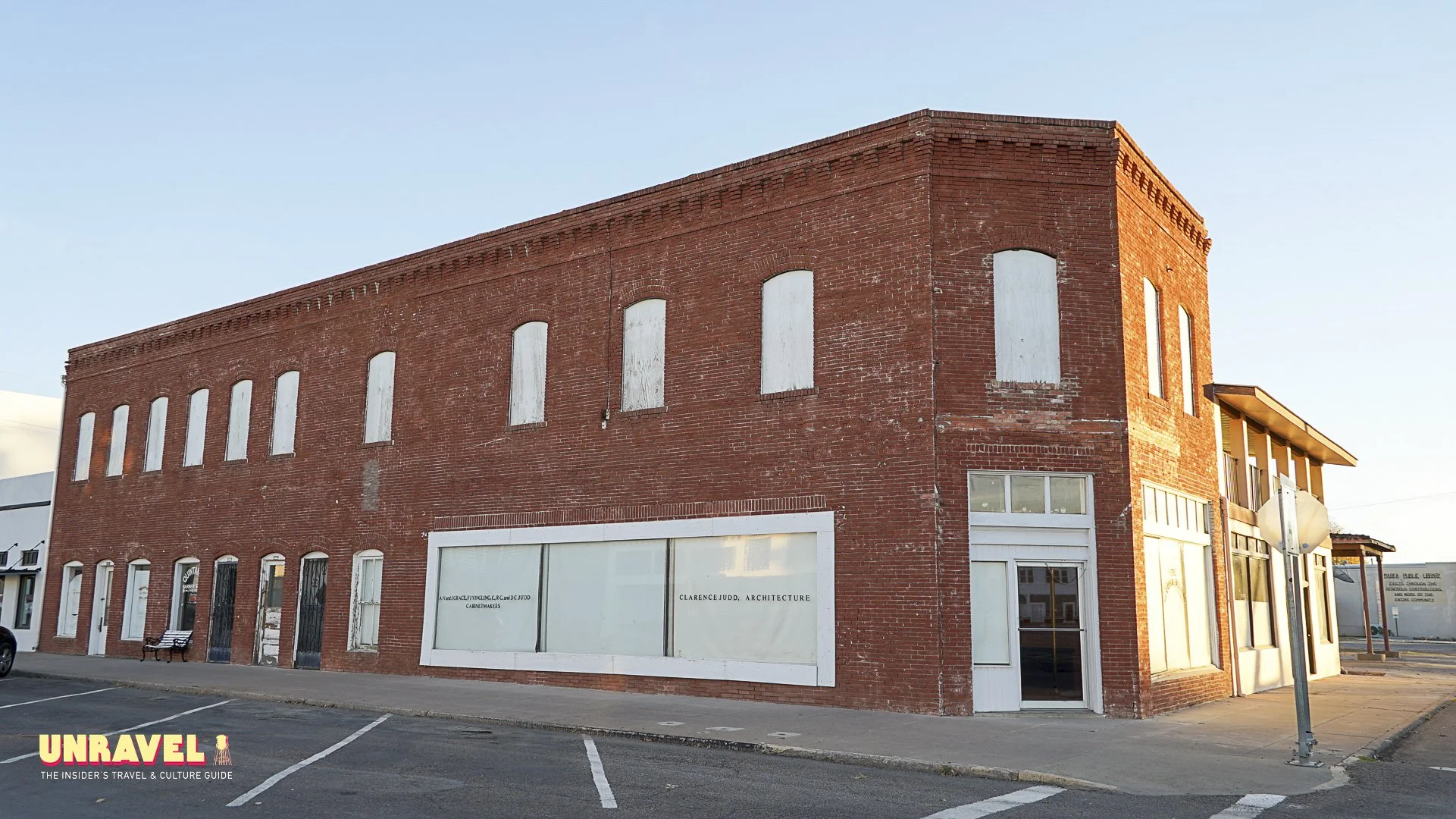
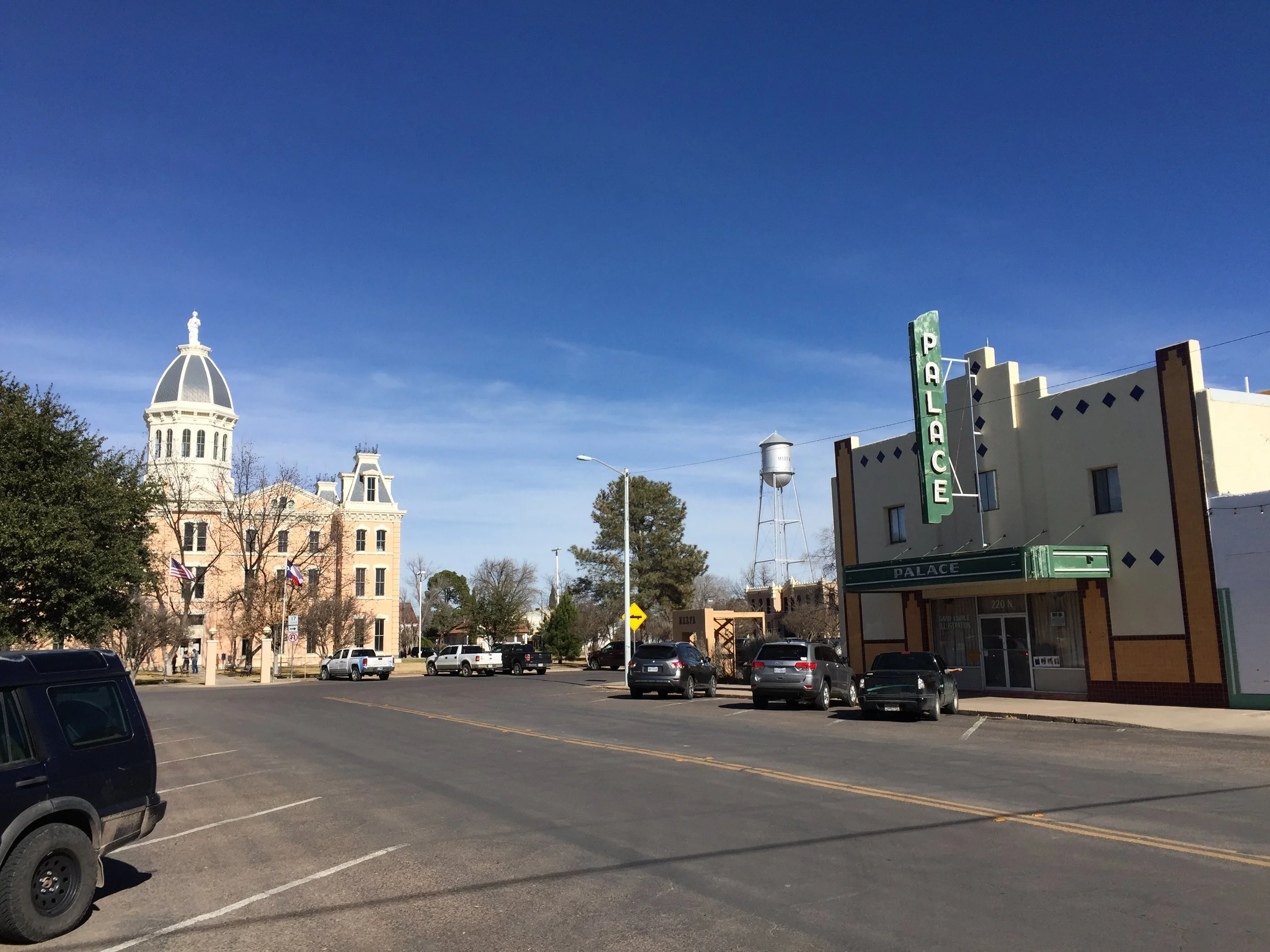
Marfa’s downtown core is more than a strip of shops—it’s a living archive of small-town Texas architecture, layered with history and quietly experimental energy. Within the Central Marfa Historic District, roughly 183 contributing buildings tell stories of mercantile ambition, railroad-era pragmatism, and 20th-century reinvention. Victorian‑era façades, old adobe storefronts, and modest commercial blocks sit alongside contemporary interventions, giving the streetscape a rhythm that feels both grounded and unexpected.
Walk the avenues, and you notice the details: pressed tin ceilings, brick corbelling, weathered wood, and tin roofs that catch the high desert light in unexpected ways. Many of these buildings have been carefully preserved, restored, or adapted—some into galleries, cafés, and studios—showing how history can coexist with the modern artistic pulse that defines Marfa today. It’s a subtle, layered choreography of past and present, one that rewards slow observation and curiosity.
In the heart of the district, architecture doesn’t just house life; it frames it. Sidewalks bustle with locals and visitors alike, gallery doors open onto narrow alleyways, and every corner seems to invite you to pause, look closer, and notice the small but deliberate design choices that give Marfa its unmistakable personality.
UNRAVEL Tip
Stroll downtown at golden hour. Watch the light stretch across the brick, adobe, and wood façades. Peek into galleries or cafés tucked into historic blocks—the buildings themselves are part of Marfa’s art scene.
#1: cool residences & rentals
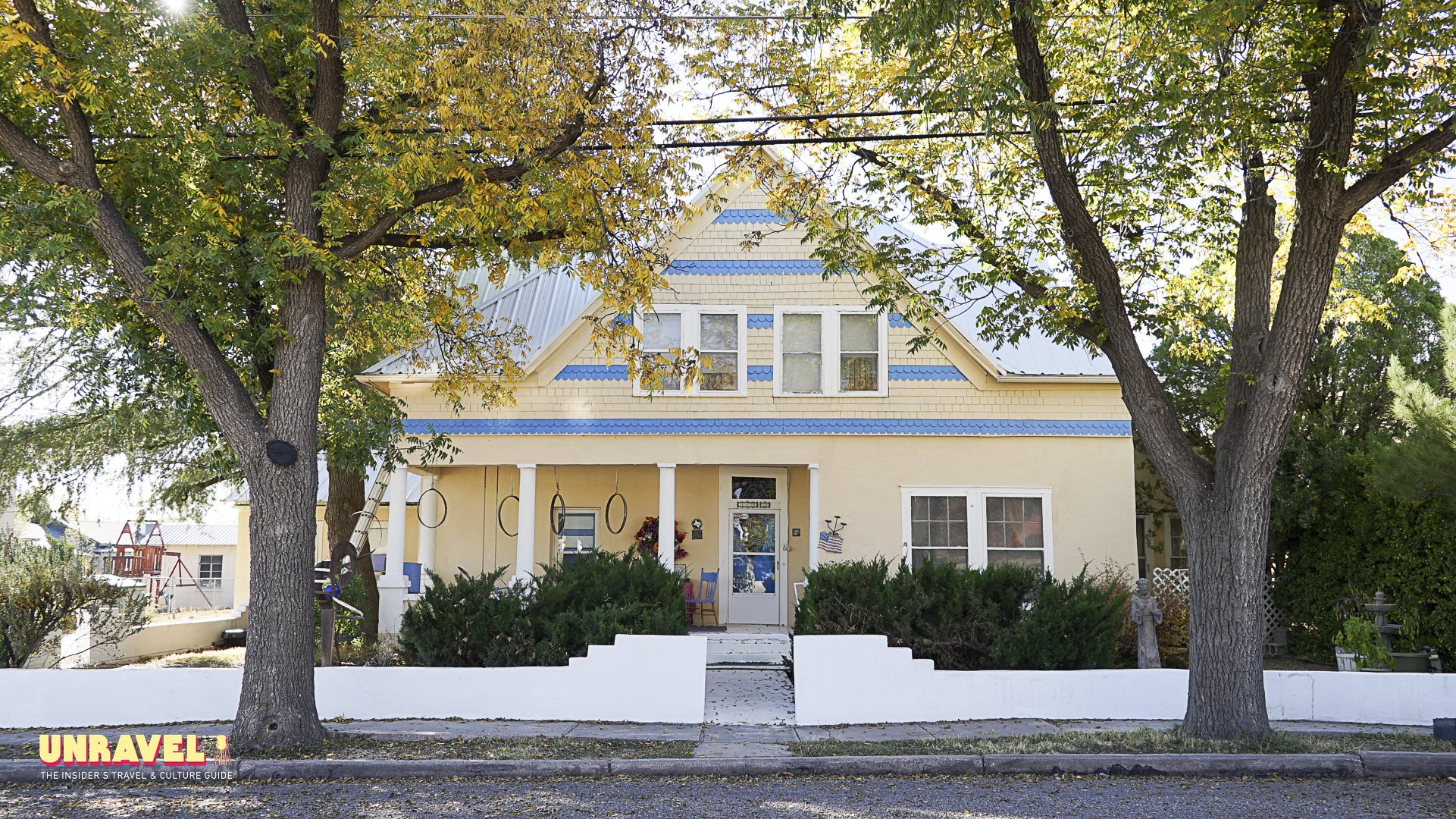
Marfa’s charm isn’t limited to its public buildings or galleries—the town’s private homes are an extension of the same creative energy that animates its streets. From understated adobe ranches to sleek modernist retreats, the residences here reflect a deep respect for landscape, light, and design. Walk or drive through town, and you notice homes that aren’t just built to occupy space—they’re built to dialogue with the desert.
Many of Marfa’s residents, including those with second homes in town, are collectors, artists, and design enthusiasts. Their properties are curated with intention: walls oriented to capture the changing light, materials chosen to age gracefully in the desert air, and art seamlessly integrated into indoor and outdoor spaces. Gardens aren’t just planted—they’re sculpted experiences, blending native flora with subtle landscaping that frames the vast horizon.
Living here—or even visiting—means participating in a culture that values slow observation and quiet sophistication. These homes are private, yes, but not all of them are off limits to guests. Their influence spills into the town: the same eye for proportion, texture, and light that shapes a living room also informs galleries, public art installations, and even the minimalist architecture that makes Marfa so visually distinctive. In a place like this, residential design becomes part of the town’s collective personality, proof that architecture, art, and landscape can coexist in harmony.
UNRAVEL Tip
Don’t trespass, but take a slow drive or walk through the residential streets at sunrise or sunset. Even from the street, you can see how homes interact with light, land, and the horizon—and imagine the care and artistry that go into making Marfa a living gallery..